21 December 2014

Did you think they wouldn't know?


One small commitment and left of center wrote the still pines.  That was last year’s yester line.  Or, finding that a constellation had formed, as rain drops one by one curdled around each empty trope, carrying on and on as if she didn’t know the weight was too much to bear.  Here’s where I found her next, Bern, reading Greek mythology and staring at her shoelaces, floating lifeless in the muck of a puddle which had amassed one bead at a time, as the crabgrass drank, as it so chanced, earlier this afternoon, to do, greyly what it had collected on the sidewalk.  Could there be anything else for it?  Would a salve cure the wound left by time, open and respecting not one lick the fundamental laws of gravity.  Welcome, Bern thought, to the Cartesian theater.  Admittance: free.  Access: direct.  You don’t know? she would intone.  Heavy emphasis on the ‘know’.  Scolding like her mother did when she tried to turn the radio off—just for kicks.  She loved the music it made, but loved better the click of the dial resetting to ‘off’.  So often she’d, and just for fun remember, turn the radio off.  Mother: No!  How was she supposed to know what everyone’s preferences were?  They were not after all written large on the faces or foreheads of the strangers or intimates, friends and family, or complete shoulder bumpers, nudgers passing longways and casting looks of “hurry up” as they lurched to catch that last train of the night.

No serpent knew she had gone alone to the bank of the river with her stockings full of stones to skip.  She wanted to be alone with her stones, and her thoughts, and the morning, heavy as it was and growing somewhat less so, or growing at oblique angles from where it began on her shoulders, moving to her sides, now then her hips, and ending at her knees.  “Bloody knees!”  A boy shouted.  How did he get so close, she thought, without my spotting him, or spotting the approach anywise of a boy-sized thing, capped as he was with a garish red beanie.  Hair, black as coal, poked out from behind his ears.  “Skipping stones?” he asked, rudely, she thought.  “No.”  He wouldn’t be having any, anyway.  But now there was the bother of having to wait for him to leave, when everything about his body said he was settling in.  Not a talker, she hoped.  “You live around here?” he asked, stupidly.  “No” she lied.  “Visiting relatives then?”  “Yes…and they’re probably wondering where I’ve got off to.”  “My parents don’t care if I play at the river” the boy proudly stated.  Why would they?  She almost said it.  Was there something good about him? she wondered in the silence that followed.  “Yeah, there aren’t many kids around here to play with.”  He picked up a stone to skip—oddly squarish—and not at all the skipping sort.  Plop.  It went under, disturbing the silt below in a great cloud that blinded the fish, gills and gravel, while up top water bugs scattered.  “Alright, you’d better get back to your relatives then” the boy shrugged.  She handed him one of her stones.  “You know what to do, right?”  “Of course.”  He let it fly, and it hit the surface once, plop.  Pathetic.  She almost said it.

Are humans sentient?  She sent letter after letter to the man who killed her husband, one night looking for drugs, closet, rope, car keys.  Left alone, bound, he returned to the scene of the crime.  It was a crime after all to let so many letters go unanswered.  That’s how every speech act goes in this world.  What substrate is there?  What meaning, pith, pitch, asphalt, underlying fundament, basic, intrinsic, deep depth; we’re born that way.  What lies beyond the seeming of things?  Beneath the seams of a garment there’s flesh and beneath that?  More sensations, I guess.  Far away stars on a mouthless afterthought.  But that’s how we’re born, after all.  Beneath the seeming of things there is more seeming and then…bum bum bum…reality.  Monads, basic particles, less seeming than so.  Thisness.  Primitive. Brute.  And there in the underseeming everything goes on like you might expect it to.  The world, after all, conforms to our expectations—especially here.  Warp and weft, ways and patterns all already imagined, prefigured in our prehistory, now projected.  Pith.  At bottom.  It’s how we’re borne.  But…then…it occurred to her that the world might not be made for us, or for her specifically.  Those stones she used to create her miniworlds were so many non-entities, so much in the way of being nothing.  Anyway she began to think less of them as stones and more as a constellation.  Parts disparate and orbiting, connected in the way that parts so often are, or parts go piecemeal one after another.  She kissed the boy without warning.  He turned beet red.  What a strange reaction.  She lifted her skirt, revealing her black knees.  She’d been praying all day in the muddy river bank, collecting her sucking stones one by one, a tribute to some long dead Scotch man who sometimes fancied wearing a turban.  A ladies man then.  That’s what he was, standing struck stupid near the passing waters of the Nile.  No serpent new, nor crocodile.  “What was that for?” he asked.  It wouldn’t be the last time.  He was slow to develop, slow to start.  But once he got going there was nothing for it.  No one could ask questions with the same degree of ingenuousness.  Because he really wanted to know, or had to, or couldn’t tell the difference between wanting and having, or had to have the difference explained at any rate by someone who could tell.  Could tell and would tell.  At any rate, someone who knew the difference between possibly telling and its being possible to tell.  Taxes, then, one could/can not pay them, for example, or one cannot pay them.  The difference is large enough for the distinction to be worth maintaining.  Or the maintaining makes it worth the difference.  At any rate there seems to be a distinction between the two.  On the face of it at least.

It was getting cold.  He was facing home and said, “can I walk you there?  To the point the road goes over the hill and disappears on the horizon?  I imagine it will take us forever, but by chance that’s how long I want it to.”

06 December 2012

The Consequences of Leisure or the Intrinsic Good of Work

In your working conditions avoid everyday mediocrity. Semirelaxation, to a background of insipid sounds, is degrading. On the other hand, accompaniment by an étude or a cacophony of voices can become as significant for work as the perceptible silence of the night. If the latter sharpens the inner ear, the former acts as touchstone for a diction ample enough to bury even the most wayward sounds.--Walter Benjamin
Benjamin writes the wayward sounds that bury once and for all every diction; ample or otherwise; amplified and otherworldly; copyist; panoplied patience; panpsyche; dialectical inner ear infection; idiomatic whatever-you-like; no knowing how he did it and no way to reproduce the results.
Wound slurry--disjecta membra.
Stonehenge with henge-horns, a crown, stars of the kind you find on a wizard’s cap, a crescent moon golden and dripping with shawl blood, raining the heavens’ fire--that’s how they measured a yard.
At the flea market, I bought one of Blake’s color plates--bulging buttocks, baby men, the kind Plato would lie with (a fine thing, good for its own sake).
He held the sun on his shoulder. It sagged like a bag full of bloody shawls, or an egg yolk, slinking as those do sometimes down a runny piece of toast.
The hammer and tongs are implements of Los, flanked by his fellow laborers.--(Color Plate 16) Blake’s Poetry and Designs. Ed. Mary Lynn Johnson and John E. Grant.
So labor makes your buttocks bulge; Blake had to know--or had he? Relying as he did on patronage, good enough for its consequences.

15 March 2012

What'd You Call Me?


After forty years of ineffable happiness, he opened his head to the outside world, matter (gobi) sliding down his sooty cheek; mandarin orange wedges slinking off a plastic spoon, and he is null, so much bulk nothing (so much bulk mass). An ending too good for [x], he thought, let alone life.

It’s a fish, I suppose. Hydrogen melting off its fins, so starlike…perhaps a star…fish shaped, something watery, floating about it. It moves, swallows smaller stars—they fuel its flares so brilliant and fin shaped.

This is me. The old me, living slapping the shoes off your socks, over my shoulder yelling: “but who says ‘crone’?” Or ‘curmudgeon’? Who says ‘integument’, for that matter, when ‘rind’ will do?

03 March 2012

Bert Lahr Didn't Want His Pants to Fall


It’s a simple enough task, explaining the truth, once you’ve got it. Not to the molepeople who think you’re the molepeople—all y’all fine thousands, stiff and suffering not one lick from your blindness.

All pain and suffering (life is) Lazare said (for me). He thought I should know, in case I might be enjoying myself. “Get out from behind the pillow; it gets worse!” And it does, but no terror fits the sinking in your chest: Kant, midlife, lecturing for tips—how philosophy has suffered from the lack of tips. The panhandlers in the park might know, or some shy rescue dog eating the park’s leavings wholesale and with ravenous lockjaw.

My friend, the clever one, with the child’s body and the woman’s hips—crooked toes on her feet from beating the souls within the tar and having each night something new to do—black streaks from eyes to chin from her office job, crying toner. We are moving this wreckage forward for history. In time these pages will be filled with whatever I can dig up—please be not too harsh with the frame—do what you will with the content.

27 February 2012

In the Crowd


Have I gone forward with the crowd, and said / Unto myself, “The face of every one / That passes by me is a mystery!”--Wordsworth

The wild effects of the light enchained me to an examination of individual faces; and although the rapidity with which the world of light flitted before the window prevented me from casting more than a glance upon each visage, still it seemed that, in my then peculiar mental state, I could frequently read, even in that brief interval of a glance, the history of long years.--Poe

I walked briskly down the steps and headed back to my perch above that consecrated bookstore (out with the books, in with the pews). My pace was too swift to get even a superficial impression of the people I passed. I decided to make a game out of summing up my reactions based on my cursory glances: sad eyes, old world style; deeply cleft chin eclipsing all other features; dark collar of chest hair escaping from shirt; steely jaw almost certainly feigning anger; insincere acceptance of the beak god gave him; something missing in the cheeks, no dimples, the undotted js, quite sexy actually, this typographic variant of a face [my face was punctuated, and when I thought of the others, with smooth, unbroken cheeks, I felt some attraction to this run-on visage].

Giving Up


I saw a pigeon hobbling on one foot. It had lost the other, somehow, or never had it to begin with, a birth defect. But in either case it had made the most of it. But what choice did it have? Do pigeons ever consider lying in the muck and giving up? Let the weather winter freeze him to the curb or some stray dog shake him in its jaws. This was an image I could latch onto; I put it down in my journal with no small satisfaction. It would end my day on a dour note. I could not have asked for more. Then perhaps tomorrow I wouldn't be so hard on myself. I am after all making the most of it. That is, how could I not be? Could I ever really lie sprawled out in the filth and let my flesh rot away? I don’t think I have the resolve to give up.

21 February 2012

Formal Request


“Dear Sir,” he began, too formal, he thought, but then the informal was too informal and missed the mark by even more. “I take it that,” no, scratch that. “Some months have passed since I last wrote, and I must assume, infer, from the absence of any response, even a brusque note regarding your intent to not reply substantively to any inquiry, that you are unwilling to answer my question. I consider it unlikely that you didn’t receive my letter, but if that is the case then I apologize for implying that you were inattentive to my request, and I write again: what, sir,”—the formality here too?—“what did Madimaken find in the abandoned chapel? I would like to justify this question, qualify, for I think it fair to assume that you consider it to be a matter of the utmost trivia. A great many words are let fall upon the page regarding this or that immoderate fancy of our beloved protagonist, yet none, not even those constituting the exigencies of his birth and education, weigh so heavily upon the mind as those describing his movements in and about the moldering entryway of the Chapel on the Hill. It is not enough to say nothing in this regard, nor will it suffice to say that there is no content. Yet it would be equally absurd to fix any one definite object. Among the concrete dry goods, sacks of flour, a wildflower garden, some dying animal, a three-legged milk-maid’s stool, none will satisfy. So too for the abstracta: free floating ennui, bravery, love of country, no, I daresay you have written an impossible situation, yet, by every hint of your language you give the impression that this is a question you can answer casually with a flick of your pen.”

Finishing this last line he crumpled the page and let it rest in his palm—it was wet at the creases and made the ink bleed. It was nervous business writing a letter, and the lack of reply was discouraging. But he had to know. Must I know? he thought. The point, that of not knowing, was weakened if he remained satisfied in not knowing—wasn’t it? It was. But I hadn’t the heart to spoil his fun by giving him any hints. I rested feebly on one leg, my calf burned, all mouths screaming, and no mother crying. Carrying Madimaken, sometimes dragging his limbless torso through a thick veil of thistles, was lonely work, and just as often it would displease him for all my efforts. Why then did I hang around, following him at times, giving my unsolicited advice and extending an unwanted hand? A good question. To be attempted later perhaps. He was pathetic—without qualification he was base—though noble in many ways, and I liked to think it was his noble qualities which attracted me to him and not his pathetic ones.

Such stories occupied my mind for some time. Nothing to do while Madimaken slept. After all, the tv was broken, working that is, but no reception. White noise seems to undulate with the stress on the front of the beat, at first, but then the mind flips the sound structure, and the accent falls to the back beat. And it doesn’t flip again until you start over. You may try to get it to go back. Go ahead. Madimaken slept with his boots on. I’d thought of taking them off but decided it would make me feel too close to him. He smelled of musk. It was overwhelming sometimes. I didn’t mind so much.

It was some time before he rose and we left his small apartment to walk to his class. No one would be there. The room would be dark and empty, perhaps even locked. Madimaken would sit down and copy the notes the professor had left on the board. Together we’d try to make sense of them, even recreate some of the discussion. Then Makimaken would crack open the back window and smoke a cigarette. Earlier he’d rolled about a dozen in under two minutes—he didn’t mind showing off at the things he was good at. Almost always he carried his cigarette kit with him. He got a bit of attention this way and even made a few friends as people would often ask him for a cigarette, and he’d make small talk while rolling a fresh one—even when he had a case of them already made.

05 November 2011

One thing with two parts.


What if we cover our bodies with something sticky, like jam or pitch? What if we thereby form an everlasting bond? Or, I consume you like Mucklebones Jack; you live like the sheep and warm milk in Polyphemus’ belly, but in mine?

Thisworldlyness


Madimaken turned the dial on the antique television. Nothing but static and white noise that sounded as if it was a world removed. He spaced. His eyes set on nothing in particular in the grey waste of October outside his apt window on the 11th floor. A fire engine horn blasted below, every 20 seconds or so. It was an elementary school class—kids taking turns hopping into the driver’s seat and pulling the cord. Madimaken was thinking, no reason perhaps, of the time he convinced Brian Bartlet—all the kids called him “fart-let”—to open his locker, the combination for which he’d forgot, said he’d forgot anyway; it wasn’t his locker. Brian turned the dial. He could open any locker he boasted. The stinky kid, no friends, always lied about everything, even trivia, why? No matter—a mean girl some 30-40 pounds on Brian swept a leg under him, brought him low, and followed with a series of swift kicks. Brian, cursing, retreating, cursing at Madimaken too, flipped us all off. Defiant, to the last. Madimaken spent the whole summer trying to befriend Brian—he’d given up on us, me and his other friends—started to identify more with Brian.

October some 14 years later, nothing had really changed. The tall buildings were just as colorless. He remembered thinking they were hotels on first arriving here. He thought it was temporary too. He turned the tv off, the fire engine still sounding. He tried to go back to sleep—the night was better—the grey gave way to black and that was at least a fitting shade for it was night after all, whereas somehow the white orange yellow of the sun struck the city just so, so that everything was blanched and the red bricks basked in the glory of its pultaceous rays. The engine’s blasting went the way of the white noise—otherworldly—an there was nothing that stayed thisworldly for long—a dim awareness of a growing headache.

When he awoke it was nothing more than a dry mouth and a lingering drowsiness. The ever-grey of the afternoon persisted outside. He would have to rise now, put on his boots, maybe try the tv again.

Then, that bundle of effervescent percepts, his journal. Would the next one, bound by no design of his own, be about the current one: he was in fact right now writing about the next one, the red one. He feared to describe it even superficially: It was a warm day, nothing to do and the corresponding feeling of quick endless moments living at once above and below her affection. A kiss then. That was his preoccupation. He kissed the naked Jesus in a cruciform fashion, up, down, left, right, b, a, start—mindful of the tradition in spite of failing to feel, well, anything at all in the place he imagined his soulspot, not even a flick of the ankle upon hearing the pulse of the nearby church bell, and why did it make some dance and sing and others feel empty? He would get up now full of sleep and eye-droop and put his boots on, maybe try the tv again.

25 October 2011

Unimportant Details


Car Sickness. Vertigo when looking down even momentarily while in an accelerated frame. His love of popular science, astronomy facts. He recorded them in his calendar notebook while riding the bus. Trying furiously to fit one in in the brief amount of time the bus stopped to pick up one here one there. Then an intermission of fragments: what the facts were and waiting at each red light for the next one and the philologists asked the writers to stop writing so they could catch a break or they went off into endless theories about method and forgot they had a subject only too many stop lights and too much [x] came out. So Samuel wrote, and here and there inserted the symbol ‘[x]’ which he had lifted from somewhere and forgot where, but he remembered this part: that its use was different in the original. By inserting an ‘[x]’ here and there S had saved some of his claims from being obviously false—but they were still not true, or if true then an empty sort of true, so he couldn’t be too satisfied. Broken skin, lost bicycle, found penny, vertigo in spite of his care to only write while the bus was stopped, the white hot ring he’d left on the bench waiting for the bus, the white hot ‘[x]’s he’d littered the pages with. Off the bus now and it was raining—first soft then hard. The force of the drops shot muddy clumps onto his legs, and the mud ran with the red from his shin wounds. S couldn’t feel it—the red. It was color. Something to look at. Though he was tempted to infuse it with a meaning it didn’t have—he resisted. It wasn’t worth it he thought, and besides probably it made the moment cheaper. So he walked around a nearly v shaped row of houses, small, white, with that perfectly unremarkable white siding, flimsy looking metal railings leading up the sides of concrete steps to blue, brown, and red doors. From there he crossed the busy road where the traffic was so consistent and swift that crossing was a real task, and crossing limp was out of the question. He crossed, timed it neatly, and began to climb the hill on the opposite side. It was steep and covered in thick grass, which now was a sleek green waterfall. He slipped, knee in the grass, finding a pocket of mud in a thick, densely coated patch of blades. It was rinsed clean in moments by the downpour. Again: same knee, all grass this time. Now he felt his shin wound. “Fuck!” he winced and clutched the sides of his leg. He made the top of the hill and was now protected by a long overhang, which grew from the roof of a squat department store. It was closed, had been for some time—tape on the windows, dark inside. He sat back against the wall, waiting for his friend—cold, but in spite of this he almost fell asleep. His calendar notebook, the one he’d been using as a journal, was kept mostly dry throughout his trip from the bus stop to the overhang, as he’d rolled it up in the front of his jacket. It now rested open on the concrete next to his dripping legs. Cleaned though they were by the rain they were still bleeding, and the one he’d twice fallen on was slightly stinging.

Samuel saw Madimaken’s work boots in the lower eighth of his visual field. He looked up. M was wearing a white dress shirt and a tie, black slacks—all of which looked absurd because of the boots, or the boots because of the shirt and pants. “You writin’ somethin’?” M indicated the calendar notebook. “Yeah. It’s a short story. I’ll read it to you later. You want to get something to eat?” “Sure my interview’s at 1:00, so I don’t got much time. How about pizza? There’s this little place by the university café?” S said ok and they walked under the overhang as far as they could before making their way through the open air between them and the pizza place. S was anxious to impress M, who wrote beautifully and was honest enough to tell him if his story was crap or maybe something worth working on. M asked S if he’d heard about [x]; S said he’d heard about it but didn’t know all the details. So M went about telling S what he’d found out just this morning digging around in his office. S said it reminded him of this paper he’d read, about the theory of [y]. M said he hadn’t heard of it but was in general not interested in [y].

Sitting over the remainder of a bland slice of pizza, S began to read to M from his calendar notebook. M, finished with his own slice by the end, replied: “You’ve got a shy sense of humor—it’s really quite funny. The part where the tortoise says, ‘when god moved the stone, all the mass made him imperceptibly small’, or, what was it?” S gave him the line. “Right: ‘god only moved and is the stone, in existing beings and men, imperceptibly small’. Was that your line? It sounds so familiar.” “Oh, no,” S said, “the tortoise is quoting [z]. I just thought, because of the way the story begins /” Here M cut S off. “No no. I don’t want to know. Frankly, it’s beautiful, the way some things can get to you when they remain mysterious. Fill in the gap and it’s a smooth ride, all the way to the end. Nobody remembers a smooth ride. Nobody writes about the time he caught the bus, had lunch with a friend before work, slept soundly. It’s the hang ups make the story—your bleeding shins, broken bike, my fuckin’ shoes! For Christ’s sake do you want to ask why I’m wearing my work boots to an interview?!” “Why are you…” S went for the bait, realized it was rhetorical, too late, and felt like an ass. Of course M didn’t want him to know why—that was an illustration of his point about odd little details. And, now, in a markedly different tone: “I moved here…when I moved to the city…I packed a large black suitcase with my clothes. I put my dress clothes on top but didn’t want my dirty shoes in the bag. So I wedged them into a box of VHS tapes, my collection of French TV. The box got lost in baggage handling—unimportant detail. When I finally got it, I’d forgotten about the shoes and put it in storage with the rest of the things I didn’t think I’d need anytime soon. Woke up this morning, going crazy looking for the shoes when I remembered: they’re with the French TV tapes.” “I’m sorry,” S said, “I get your point—about detail.” “I know you do,” M said reassuringly, “but I don’t mind telling you about my shoes.” And they sat there in silence as S finished his slice. “Ready to go?” M asked.

22 October 2011

Van Orman


'Lo! a rabbit.'--Quine

Willard in the offseason was an amateur gardener v barber—trimmer of beards and bushes. His garden was populated by the most sensuous topiaries, this or that bush pegasizing.

19 October 2011

M Heid


What few people know about Heidegger is that for most of his life he owned and operated his own cheese shop. He would tell his customers: “The question is not ‘Is this cheese or not?’ but ‘How is this cheese?’.” Then he’d say, after a brief pause during which he’d furrow his brow and give the air of contemplation, “It’s wonderful…the cheese in its skin is not the cheese on the cracker. Just try it, and you’ll see that it’s true.”

18 October 2011

natural disasters


cyclonic columns topped with cyclopic torsos
the same axe
which chopped down this/that tree
now situated against-the-barn doorly

some gnarly root shot through with tumors
trembling raw under the salt lick

some dog rolled init
or that’s how it smelled

Prolepsis


Sloughing off, shedding by rubbing beak and mane against the bark of a fallen tree, undoing months of extreme narrowness and the paucity of otherworldly thoughts: let them pollute this page, so it is no longer usable, blazing lines of wild undergrowth through the empty expanse.

Good natured clear headedness: how sense can be purple or meaning—how anything can—or can fail to feel lachrymose-wise at the sensing of a hamster or hedgehog nudging an apple, red off the edge of a blue, softly shifting, blanket. Was he already bloody before the eagle came to feed on his midsection? Or was he yet bleeding proleptically—how anything can—or can fail to bleed squeezing turniply—you can’t—that’s the long and short of it.

14 October 2011

Promise


From what I’ve seen so far I can’t believe my eyes, and what a nice surprise.—David Bazan

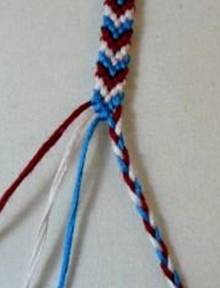
A simple matter of ordering, one lace over another, over the other and pull. This was to be a symbol of his affection in the absence of his devotion, which he knew not how to give. That would come later if it came at all; this was a gift, a handmade bracelet. He had chosen the colors, black, red, light and dark blue. When he tied it around her wrist he could see that it was too big. Her wrists were skinny—far skinnier than his, so he untied it and went to put it on a second time. “Uh, you know,” she said, “that’s ok. I’ve already got one, and I never wear it.” He was thinking of what to say, stunned. She was already gone. She had ducked into her class late—it was in Moss Hall, which looked nothing like a hall and everything like a hut. A large professor was well under way with her heavy intoning: “…that God would have no pity on those who could not work up the will to save their very own souls…that the exigencies of the state after the fall were patently clear to anyone who could see…was enough to motivate all and only those who could discern the value of being…and that those who undervalued their existence should not serve as objects of sympathy…”

That was the kind of nonsense he couldn’t listen to much of, though the mass of the door cut off the rest of her speech and freed his mind to work on more worldly things, so his patience wasn’t much tested. He began to unravel the bracelet; he felt he had to. There was no sense in dwelling on it. It was made and could be unmade—a kind of happy symmetry not in everything. If he were younger he might lose sleep over the event of his rejection. But he would see her again and try a different tack. Perhaps he would work on a symbol of his [x]—now that he knew how to give it, the matter was not a great deal more taxing.

A letter, that would express what he felt without fail and in an intelligible script. Slowly he dragged out each letter, the words were empty, but the page was full, and that alone would signify. It was his [x], after all, that he was going for, a kind of sweat slick to where they buried the extra letters under an ‘…’.

It was finished. It said all it needed to say. But, and he’d guessed it from the start, he couldn’t hand it to her. Nor even could he simply let it drop at her feet for her to find it. No it wasn’t meant to be seen by her eyes or anyone else’s. It was his after all, his being in sum. How very little must he value it to give it away—how much must he value it to keep it, or, and here she interrupted: “What’s that?” “A letter,” he said, “for you.”

She stood there before him, reading it immediately. Not what he’d expected she’d do—don’t people take letters to read later?

“It’s very nice” she said at last and handed it back to him.

But he’d learned: “No. Keep it.”

And she did.

13 October 2011

Structured by a startling and, from the exoteric point of view, unimaginable principle.


I know I can write my way out of this black hole back to all the things that I miss.--Blake Schwarzenbach

Notes on “The Statue and the Bust”: Browning paying a compliment to his wife “filled the fine empty” where the sheath is the body or soul and an allusion to Byron’s child—a moment of affine voraussetzung—a crime a literal crime—narrative representation of speech. Terza rima not so easy in Italian; desperate rhymes just out of arms reach; encolure: the neck and shoulder of a horse.

She was to be his guide from the airport to the hotel; he looked at her and held her in his vision a moment before she recognized his placard—it was a long moment. She was saying something in Italian, sounded like “terza rima,” her name maybe. He gave her a look like only a lover could, and he held it, and it almost stuck. Her dress was gaudy. This blood act ruins deeply, it made him think, in a poetic humor. Gladly he would stare at her all afternoon. She was charming.

What would “fill the fine empty” of that cab ride to the hotel? He with his broken Italian and only a sneeze of German: voraussetzung! He thought he saw the moon already, hiding behind some black dumpster, a blink betraying its pretense; it pretends to be awake.

He tried out his Italian on her—trying to find some consonance (her city after all rhymed with his, though it was a desperate rhyme)—but it was broken, his Italian that is.

And so they arrived at his hotel and without a word she accompanied him to his room and undressed. The hot evening spilling in from the balcony drew moisture from her thighs in arabesque conduits down her legs—they made the circuit while he muttered I love you through clenched teeth and in a language she was sure to fail to understand.

He traced a finger along her stomach to the purlieu of a dark thicket of exquisite nettles, shrouded about in the room’s heavy and darkening sadness. He enjoyed most of all the post-coital melancholy—what vulgarity he could summon in such a state. This blood act ruins deeply, gladly your gaudy dress; it leaves you charming with trash-heap grime and rot, behind a cramped apartment; the dumpster blocks out the setting moon—your makeup—your eyes.

I love you he uttered through sour lips. He crept out of the room and made his way down to the hotel bar—she pretended to not be awake.

Too jetlagged to feel his heart break, he drank, through clenched teeth. He’d live, he thought, tonight tomorrow.

Taken In


Now the loonies poured out into the sun, the better behaved left to their own devices, the others in herds in charge of warders. The whistle blew and the herd stopped; again, and it proceeded.--Beckett

Warm now. The stifling filth of a comfortable bed. I’d been taken in, underwing, hot soup spoon in my mouth. The same one I breathed out of, and in, for lack of etiquette. The nose, now that was for smelling, sniffing. The life breath came through that gaping, toothed hole. The life breath and pie, of course. Some things go without saying—pie, nearly always. So I’d found that someone had quite rudely plucked me out of my fantasy, on that endless hill of pedestrian happenings, and placed me squarely with a bed, blanket, three squares a day, and a fuck of a headache. Ok, so maybe I can’t blame them for the last, but the rest was bad enough. I looked down. What the hell had they dressed me in? A tuxedo? with long, wrinkled tails. I looked like a fucking muddy penguin. Sort of wished I was one. This whole disaster—these comforts seemed to grow on me, gradually, so that one day, today in fact, I was suddenly amazed at how they got there—how I got there. Was I so incurious as to let the world, no, time, work itself on me and my outfit? Could it be helped? I felt sick. The others, who had witnessed it all along, knowingly, they looked at me now, deeply concerned. Felix, for one, and Fingali, they were both good friends, just like my tux was a good fit. They helped me to my feet. My every need would be attended to. Felix said, “You ok?” “You gonna eat that,” I replied eying the unopened candy bar in his breast pocket. “Too early for candy.” And it was. But I’d come this far insensible of the rules; it seemed a grave solecism to stop now.

12 October 2011

Meeting Place


Tire scraps on the federal roads look like crashlanded crows from the dial-a-view.—Jason Lytle

Akerlund lifted his torso out of bed and into his chair; his ghost legs all cramped, bloodless, and he couldn’t rub the sleep out of his eyes, though he tried with beet red fists. He rolled himself over to his window. It was a large double paned portal with dark brown brows and leaden lashes. Outside it was raining; students were just beginning to get out of their classes on politics and law, and the clouds cast an old-fashioned black and white movie on the quad.

A girl stood by a soggy tree. Akerlund thought he knew her, had slept with her, met her parents. She seemed to be waiting for something, looked now and then at the clocktower, lifted toe then heel in the attendant’s fidget. Her hair was thick, blonde, and hardly touched by the rain, which dotted her blue t-shirt. She looked up at Akerlund’s room, almost made eye contact—he didn’t know her, probably hadn’t slept with her (but now he wanted to), almost certainly hadn’t met her parents—they lived in Chicago; he’d never been. Her face showed her an almost imperturbably patient waiter. Her friend and expectant boyfriend wasn’t coming, or was but wouldn’t arrive until an hour after she gave up.

Akerlund saw him panicked and rushing towards the tree, now sheltering a few squirrels but nothing else. He stood nearly dazed and cast an incredulous stare at the clocktower; it moved a hand and reset his calculations. Now he looked sad. Akerlund felt nothing but watched. Their paths had crossed in space but not time. She may as well have been in Chicago—he’d never been.

11 October 2011

Indirect Representations of Thought: An Exercise in Narrative Ambiguity


I committed Akerlund to the asylum of the Corry Public Library; I even got him something not too demanding to read. It was of course a book on mythology—with a great many sensuous pictures of the gods in all their complete lack of concern for what was going on below. They were the gods humans wanted to be, the gods humans would be, with every base human nature and all of the divine. No contradiction just a kind of anti-climactic joining of the weak and the strong.

* * *

A discovered poet who writes simply of what he sees is taken to be a master of irony and allegory:

There were long curtains of a brownish grey which made the passing motorists seem covered in gauze or a gauzy haze.

a. freq. attrib. The view made popular by [x] that all truth is obscured, veiled, and everything out of reach, gauzelike (read here: godlike); the ineffable world beyond the perceptual.

* * *

There could be no saving the miserable pennies now, for the long or the short hours—all hours alike—were for the road. He’d gone far down along it, no reason why. With not so much as a goodbye Akerlund left his 11th story apt not intending to return. It was wet, and just of that morning chilly, on the walkway outside. Can there be a moment of decision? Can I decide? was in fact what he was thinking, without thinking the words that he knew followed and would force an immediate answer. What he wanted to know was whether he would continue along the walkway and to the airport, and so on until he was more or less comfortably settled into a new life abroad, without so much as a postcard sent to me, his shadow and constant tormentor. Or, on the other hand, and already this thought led to what it seemed to lead to, with automatic discursive facility: had this thought set a chain of events in motion that would lead him to turn back, to abort his plans? Was it enough—and this was a third question—just to think of a question, and, before the mind (Akerlund, that is) had even a second to consider its answer, the decision based on that very answer…no…that could be made clearer. He tried again: had he already decided pennies, pity, and the lot, to turn back? Not consciously—he hadn’t even finished posing the question to himself when he felt with a certain degree of certainty that he’d already begun to act on its answer. The answer, the question, these were formalities, diversions, redundancies. Was it just this one particularly wet moment on a newly chilled day that was unique? The cats darting behind the green trash cans seemed to know even this titanic puzzler. The answer wasn’t so much in their dashing, or their cork-screwed tails, as in their pig-like squealing. South America, Akerlund thought, warm weather. The easy life. He opened the door to his apartment, quickly; no one had noticed he’d left. It was eight minutes past the hour, the long one.